Your voice, your city: why vote in the upcoming youth elections?
Next Sunday, 19 October, Colombia will hold elections for the Municipal and Local Youth Councils. This event is a concrete opportunity for young people’s voices to influence public policy. The Councils are not distant institutions: they are platforms where youth voices can influence budgets, projects and policies that transform your city.
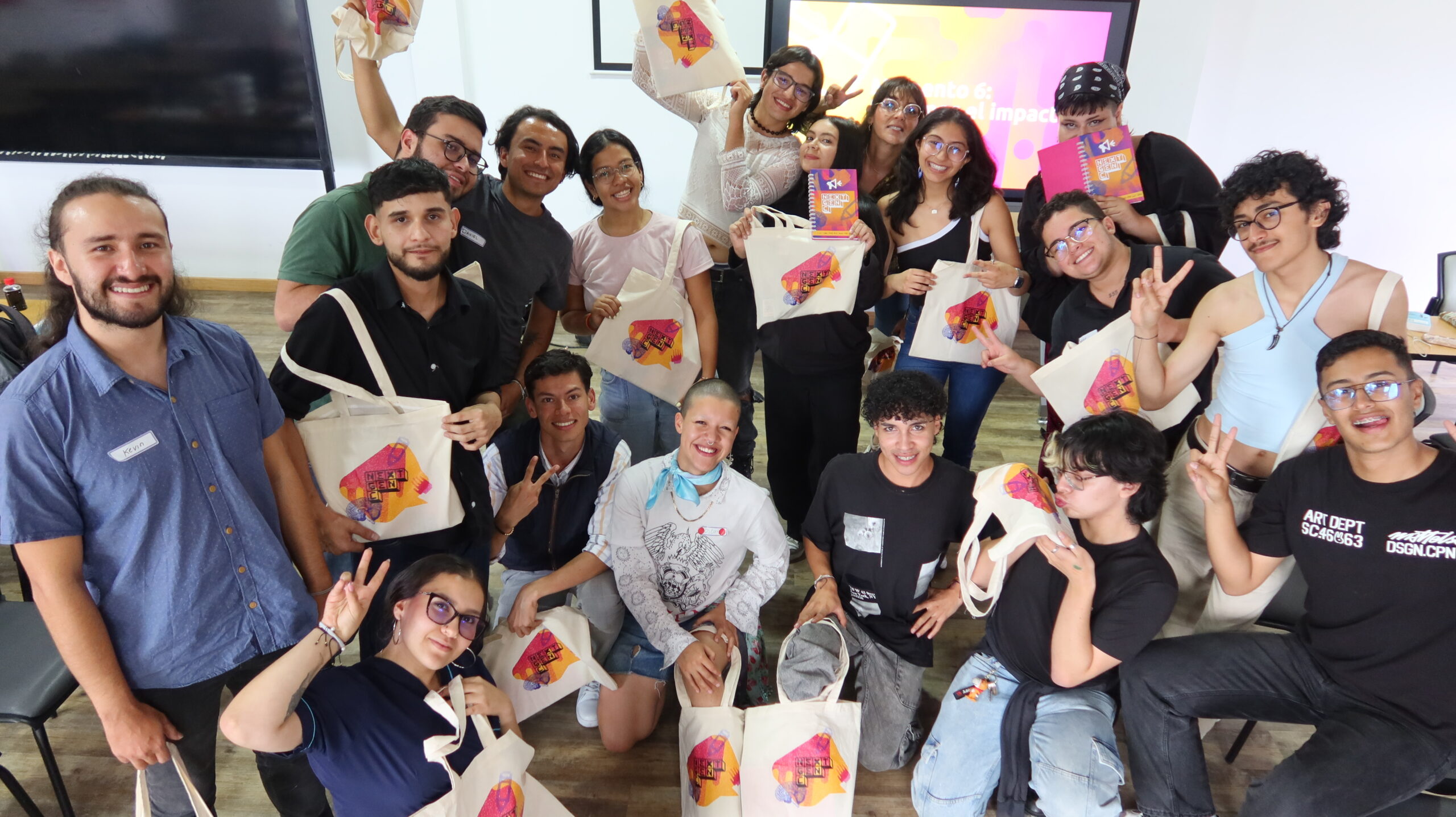
Indeed, understanding how young people engage in these forums and what factors facilitate or limit their participation has been the aim of ‘Why NextGenC: Urban Connected Generation?’[1], a research project analysing the territorial, political, social and technological dynamics that influence technology-mediated youth political participation in medium-sized cities in Colombia such as Cartagena, Manizales and Quibdó. Through 14 youth councillors' interviews in the shortlisted cities and focus groups with councillors in Manizales and Quibdó, the project has documented the direct voices of those who already hold these representative roles.
What we have found
The findings reveal enormous potential for youth-led transformation that is not yet reflected in robust institutional decisions. Although public discourse recognises young people as key actors in development (for example, through public youth policies and participation platforms), the research highlights three obstacles that limit youth participation:
- Adverse socio-economic conditions, such as high rates of poverty, unemployment and insecurity, coupled with a deterioration in mental health, mean that many young people prioritise day-to-day survival over activism and political participation.
- Institutional weakness, reflected in low-budget execution rates, programme discontinuity, and adult-centred[2] decision-making, fuels the perception that ‘decisions remain on paper’ and undermines trust in institutions.
- Fragmentation between youth policies and development plans undermines coordination, diminishes the visibility of Youth Councils, and limits the advocacy capacity of their representatives.
These obstacles must not only be recognised; they also explain why it is strategic to occupy, strengthen, and transform these spaces of representation through youth participation.
Furthermore, #NextGenC has carried out field research, supporting forums and activities involving youth councillors (e.g., assemblies, candidate debates, youth platform meetings), as well as conducting interviews. What young people have to say on this matter is:
- Municipal and District Youth Councils are a fundamental mechanism for implementing the Youth Citizenship Statute at a local level. Their effectiveness depends largely on their ability to adapt national guidelines to the specific dynamics, challenges and needs of each local area. In cases where the councils have remained active, this flexibility has been key to overcoming operational obstacles and promoting more relevant and context-specific youth participation.
- The legitimacy of Youth Councils is linked to their ability to maintain a constant connection with grassroots processes and with other forums for youth participation. When councillors become detached from their peers or from community dynamics, the councils tend to be perceived as elite spaces, which undermines their representativeness and their capacity to engage in dialogue with both institutions and organised youth groups.
- In contexts marked by violence, Youth Councils have emerged as key forums for shaping alternative forms of local governance. Drawing on their representative role, some councillors have taken on mediation and negotiation roles in defence of young people’s interests in dealings with armed groups, thereby contributing to the development of resistance movements and the promotion of peace initiatives at the grassroots level.
Power that already exists, power yet to be harnessed
In Colombia, young people are already transforming reality on multiple fronts: through collectives, community projects that revitalise neighbourhoods, artistic expressions that challenge the system, struggles for gender justice, environmental advocacy and digital activism that mobilises thousands. That same power must be present in the places where public policy decisions are made. Youth Councils are not abstract structures: they are platforms for directly influencing the community direction.
Your vote counts
Voting is not just a symbolic act: it is a strategic move to take up space, bring about change and demand that these forums function as genuine mechanisms of representation. The collective power of young people is immense: according to data from the National Electoral Register, there are 11,702,436 young people aged between 14 and 28 eligibles to vote across the country. This figure represents an electoral force capable of redefining priorities.
The energy you already demonstrate in your group, in your neighbourhood, in your projects and on social media is the very same energy that can change decision-making spaces. Your vote is the tool to bring the causes you champion to the table where change is made.
This Sunday, 19 October, get involved. Your vote is not just a right: it is the tool that turns your causes into decisions. Colombia’s future is also decided by you: the young people.
[1] This project is funded by the Botnar Foundation, a Swiss philanthropic foundation, and led by LSE Cities at the London School of Economics and Political Science (LSE) in London, in partnership with ICESI University in Cali and the University of the Andes in Bogotá. Also involved in the project are the global organisation United Cities and Local Governments (UCLG) and Despacio in Bogotá. For further information, please see the following link.
[2] Adult-centrism refers to a form of social and cultural organisation in which the perspectives, values and decisions of adults take precedence over those of children and young people, subordinating their voices and undermining the legitimacy of their experiences and forms of participation.