
#NextGenC joins a national alliance to promote the ‘Young People in Society 2026’ study
#NextGenC joined a national alliance of media organisations and social organisations to produce the report ‘Young People in Society 2026’, which can be downloaded via this link. The report gives a voice to Colombia’s young people and provides an up-to-date analysis of their relationship with democracy, civic participation and the main challenges they face today.
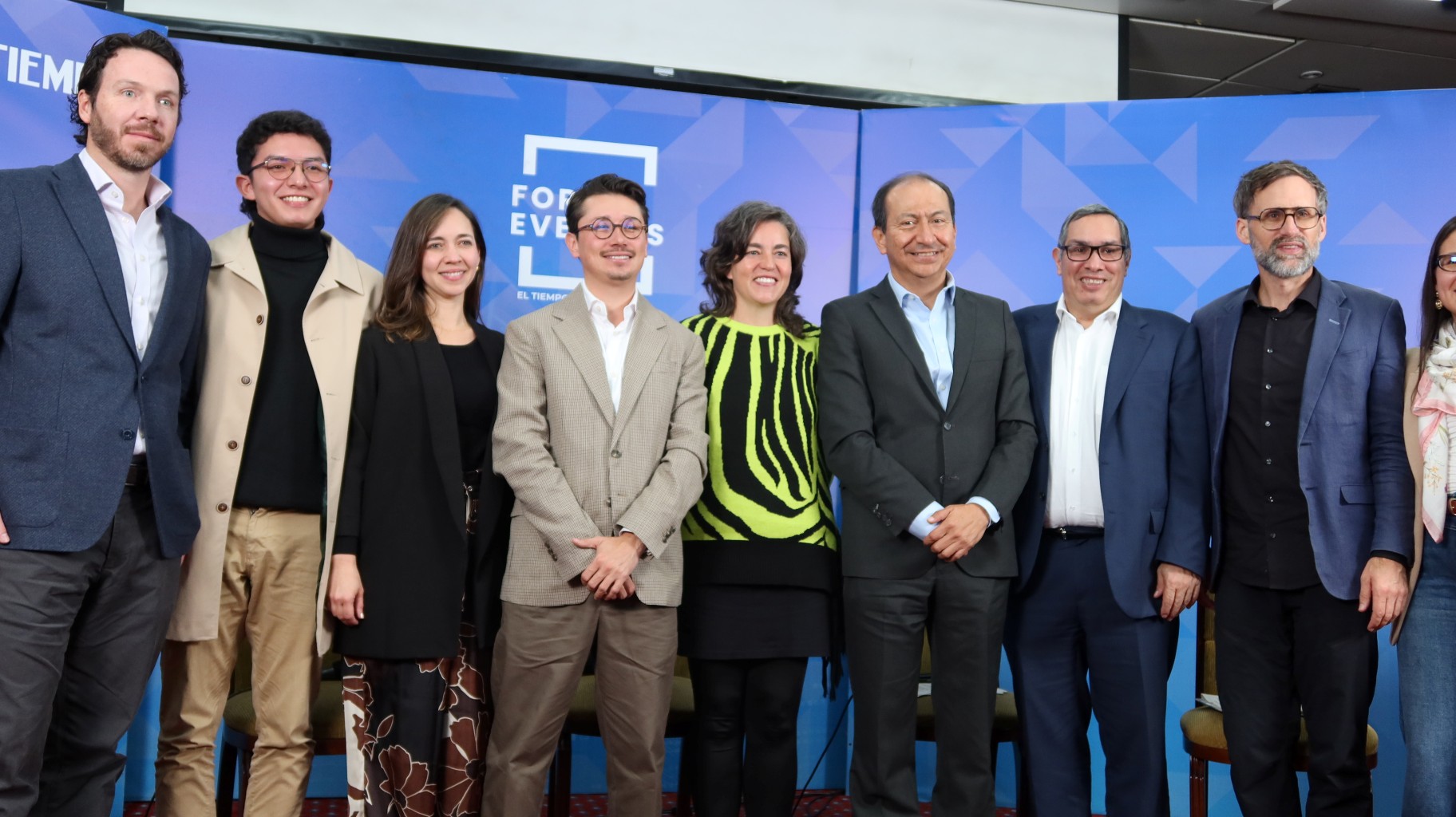
The survey was publicly presented at a panel discussion held at El Tiempo, in partnership with Cifras y Conceptos, the Corona Foundation, the Bolívar Davivienda Foundation, the London School of Economics and Political Science, and #NextGenC. The event brought together stakeholders from different sectors to discuss the study’s findings, focusing on young people’s perspectives on democracy, institutional trust and forms of political participation in the country.
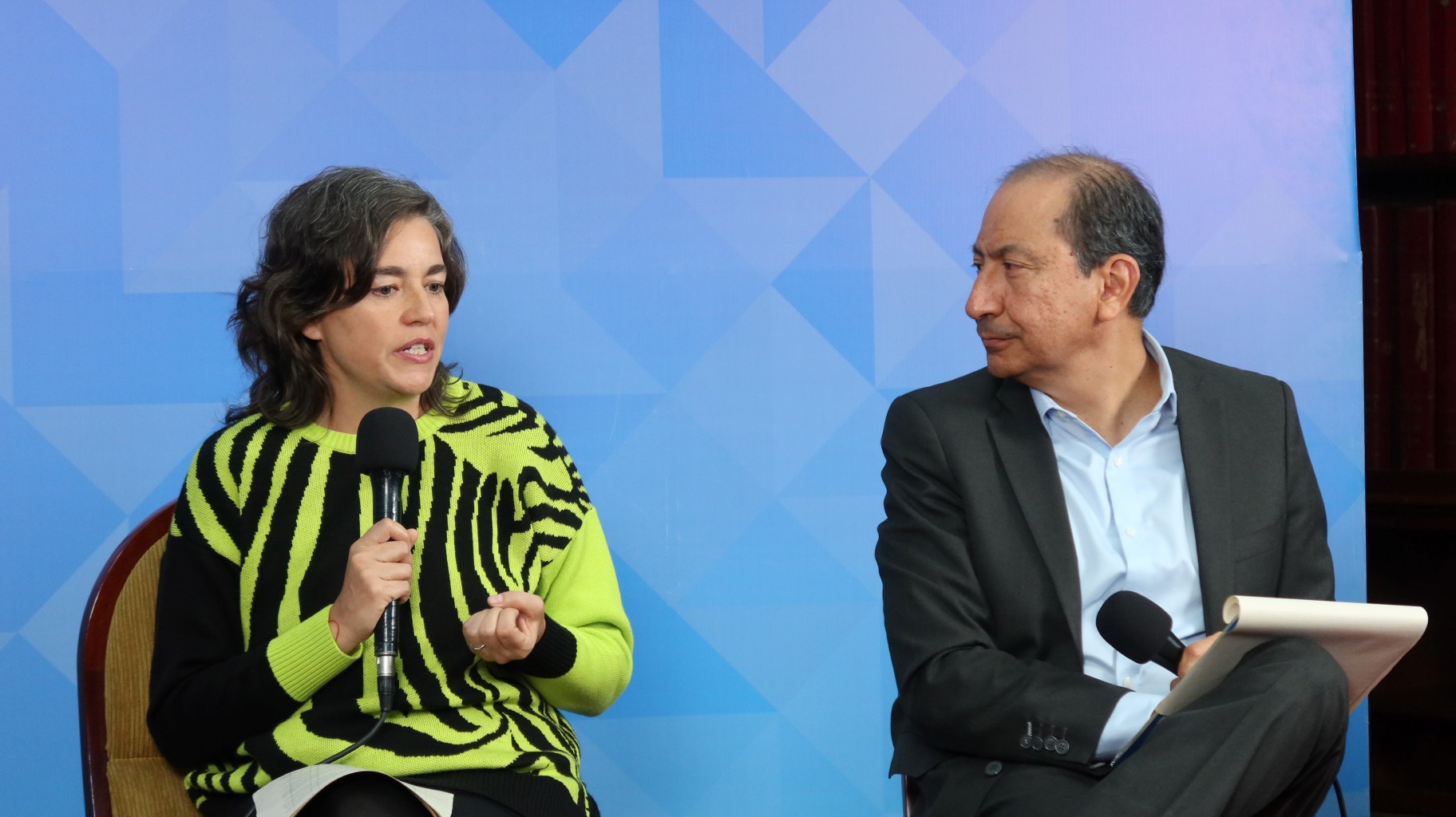
During the presentation, César Caballero, director of Cifras y Conceptos, emphasised the methodological rigour of the study:
“This study is published in accordance with the guidelines of the new polling law. The sample comprises 3,200 surveys, representative of more than 10 million young people across 32 municipalities in the country. All surveys were conducted in person, face-to-face.”
#NextGenC: linking national data with the urban experience
For #NextGenC, this survey is seen as an opportunity to deepen and complement the work the project has been carrying out in the country’s medium-sized cities.
Philipp Rode, executive director of LSE Cities and principal investigator for #NextGenC, emphasised that the results allow us to go beyond an aggregate analysis:
“The survey results allow us to broaden our understanding of civic participation. For #NextGenC, the focus is on translating these national findings into more localised insights: how young people engage with their cities, where they participate, where they face frustrations, and how formal and informal, in-person and digital forms of participation are combined today.”
Rode also emphasised that cities are a key space for democracy, because it is there that young people live, organise themselves and build everyday connections that directly influence urban governance.

Data that complements qualitative research
For Olga Lucía Sorzano, a research associate at LSE Cities and leader of the NextGenC project, the value of the survey lies in its ability to enrich the qualitative work the project has carried out in recent years:
“At NextGenC and LSE Cities, we have strongly championed the conduct of this survey because this data allows us to reinforce and enrich the findings we have been developing in collaboration with the Universidad de los Andes, the Universidad Icesi and Despacio. The survey provides representative information which, when considered alongside the qualitative data and fieldwork, helps us to better understand the figures and the realities faced by young people”.
In this regard, the survey becomes a key tool for cross-referencing national data with local, regional and urban experiences.
Some key findings from ‘Young People in Society 2026’
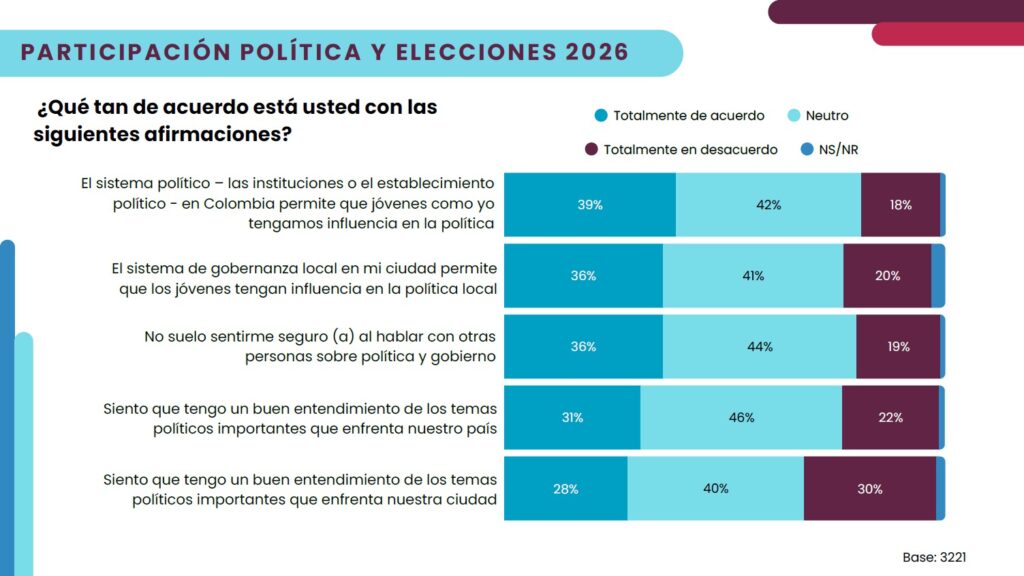
Among the study’s key findings are:
- An ideological shift towards the centre: the loss of support for the left is mainly being redistributed towards centrist positions and, to a lesser extent, towards the right, suggesting a less polarised and more pragmatic youth.
- Selective trust in institutions: young people tend to place greater trust in bodies that exercise oversight, control and safeguard civil rights, even whilst expressing mistrust of traditional politics.
- Participation without impact: although there is a willingness to participate politically, a significant proportion of young people do not feel that their views are taken into account in public decision-making.
- Key issues: employment, safety and access to education remain the main challenges identified by young people, whilst digital connectivity does not feature as a central concern.
- Barriers to local participation: structural obstacles persist that limit young people’s participation in local government and civic activities, such as the lack of genuine opportunities to influence policy and institutional recognition.
Download the study via this link and watch the event here: