NextGenC Feedback Festival: how we brought three years of findings to a close alongside young people
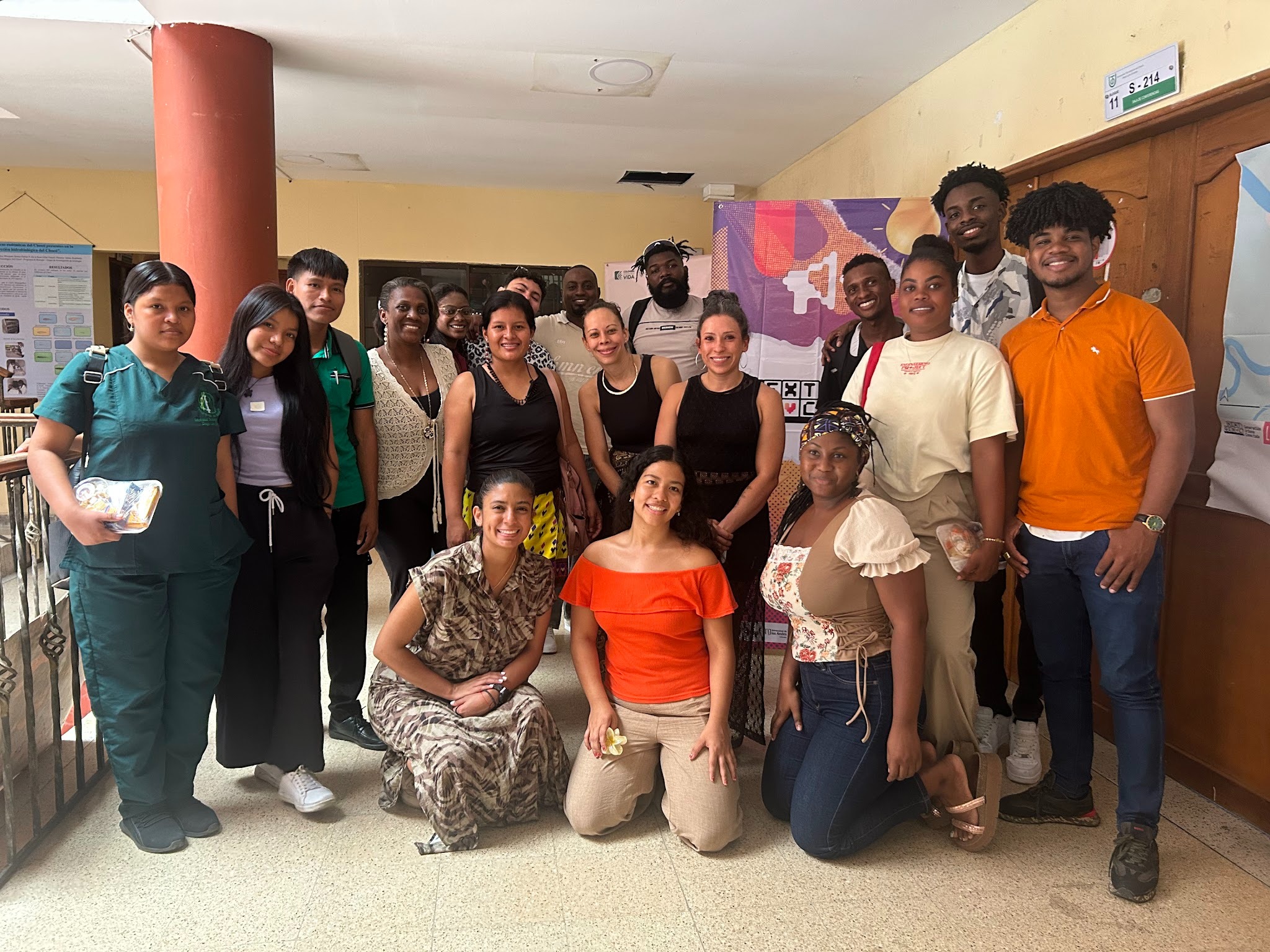
Photography: NextGenC, Quibdó
The research journey only makes sense when it returns to the place where it began. After almost three years of walking the streets, listening to community groups and mapping youth leadership in Colombia’s medium-sized cities, we began our closing phase by returning to these areas. On 10, 17 and 21 July, Cartagena, Quibdó and Manizales hosted our #NextGenC Conversa | Feedback Festival: an essential reunion with the young people, local authorities and universities that made every step forward in this collaborative research project possible.
The purpose of these three meetings was not merely to present findings, but to acknowledge the lessons learnt collectively. At NextGenC, we have explored how participation, technology and new forms of social organisation strengthen local democracy. Therefore, taking the data back to the communities was an act of transparency and gratitude towards those who transform their environments day in, day out.
The democratic paradox: great value, little satisfaction
During the presentation sessions, the analysis shared through the ‘Youth in Society 2026’ study sparked some discussion. The data reflects a latent paradox in the country: on the one hand, 61 per cent of young people consider it very important to live in a democratic country. However, dissatisfaction with how democracy actually functions stands at 50 per cent, with a further 32 per cent of those surveyed stating they are ‘somewhat dissatisfied’.
Barriers to voting in local elections also showed common patterns across the country. A lack of information is the leading cause of abstention at 53 per cent, followed by mistrust of local governments at 39 per cent. Added to this is the fact that ideological stance varies drastically by region: whilst in Manizales the centre dominates by a wide margin at 60 per cent, in Quibdó the left stands at 42 per cent and in Cartagena it stands at 28 per cent.
The day-to-day concerns of young people were also laid bare, showing that unemployment is the biggest structural headache in all three cities:
- Manizales: the main priority is employment (81 per cent), followed by health (53 per cent) and education (51 per cent).
- Quibdó: the picture shows employment as the top priority (66 per cent), closely followed by healthcare (64 per cent) and safety (56 per cent).
- Cartagena: young people prioritise employment (61 per cent), health (45 per cent) and safety (44 per cent).
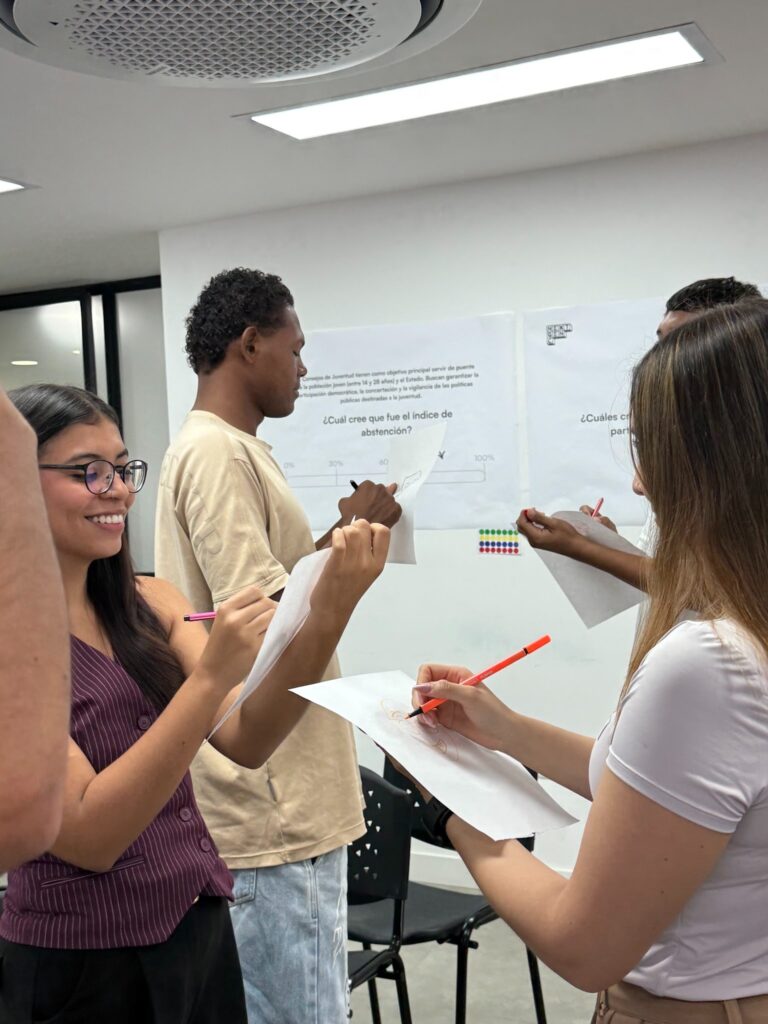
Photography: NextGenC, Cartagena
From data to lived experience: what we were told in the regions
The figures took on greater significance when contrasted with the reflections of local stakeholders. In Cartagena, the discussion centred on the need to break down the prejudices levelled at young people.
Laura Lozada, coordinator of the Conexión Juvenil Hub in Cartagena, summed it up as follows:
“NextGenC’s main contribution to the city is providing qualitative and quantitative data on youth participation, which is important because we often base our work on stereotypes or our preconceptions of others, and fail to see that there is a reality with which we must engage.”.
In the same vein, Yina Romero, from the Youth Directorate of the Bolívar Regional Government, highlighted the exercise in institutional empathy experienced during the workshop:
“The most important thing we learnt at the meeting was to coordinate our efforts and put ourselves in the other person’s shoes to understand where their needs come from, to think about ways of working together to achieve a common goal, and to address young people’s needs.”.
Meanwhile, in Quibdó, the findings reignited the debate on the lack of trust in traditional institutions. The survey in this city showed that young people trust social media (49 per cent) and digital platforms (31 per cent) far more than political parties (38 per cent).
María Fernanda Alomía, investigadora del Centro de Estudio del Bienestar (POLIS), señaló:
“For local governance – public and private institutions – the participation of young people is recognised as important, but they need to join forces to ensure it and work to build young people’s trust in institutions, which is a long-standing challenge.”.
The importance of a differentiated approach also resonated strongly at the Quibdó workshop. One participant shared her excitement at seeing the data collected:
“I liked the data on the participation of Afro-Colombian and Indigenous young people. Realising that, even though this is a diverse department, communities have different ways of participating in their own processes was very exciting and opens the door for those who wish to find ways to get involved.”.
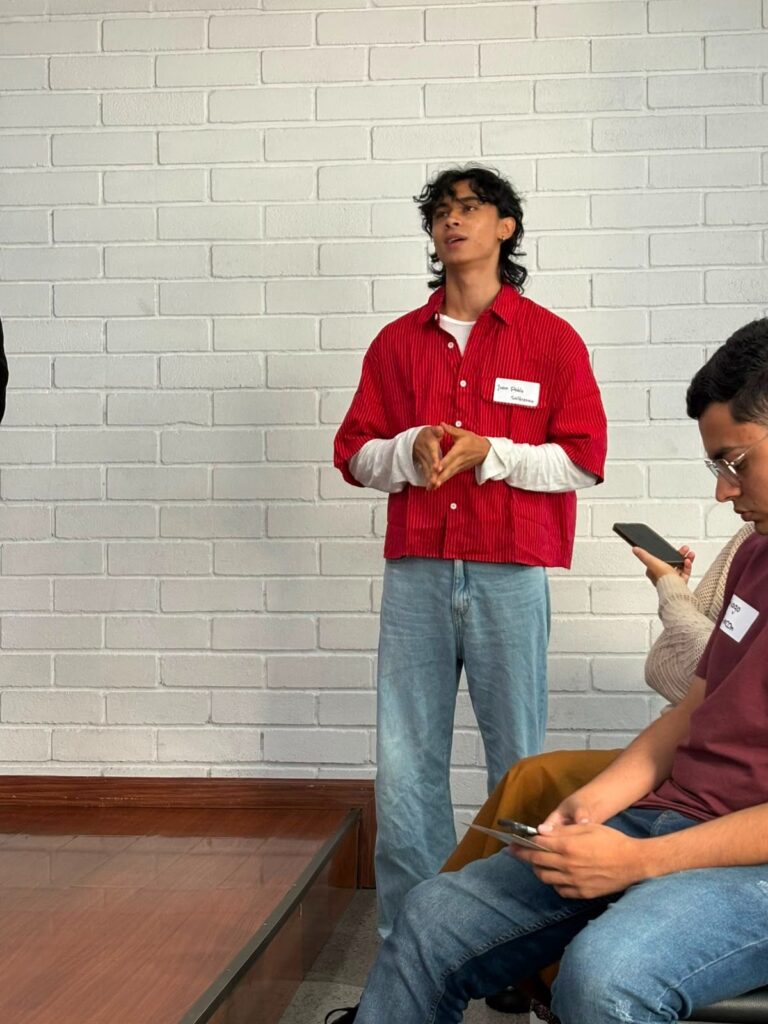
Photography: NextGenC, Manizales
Manizales: autonomy to develop their own solutions
The final stop on the ‘#NextGenC Conversa | Feedback Festival’ in Manizales reaffirmed that young people not only identify the issues but also demand real spaces in which to implement solutions. Paola Andrea Valencia Otálvaro, executive director of the Leadership Institute Foundation (FIL), praised the design of the laboratory proposed by NextGenC in the capital of Caldas:
“It allows us to have a space, a model, a laboratory where young people can engage in dialogue, drawing on their differences and diverse perspectives, to define how they want to live and what they contribute to the world. They need to see that their ideas, if they manage to organise and communicate them effectively, will find allies who will help them turn those ideas into concrete actions for young people’s wellbeing.”.
Luis Enrique Blandón, who attended the event in Manizales, concluded with a message of autonomy:
“The most important thing was the power of young people. This is a space created by and for young people, where they identify problems but also take the lead in finding solutions independently. I dream of a youthful Manizales, but one with real opportunities in terms of mental health, education and access to work.”.
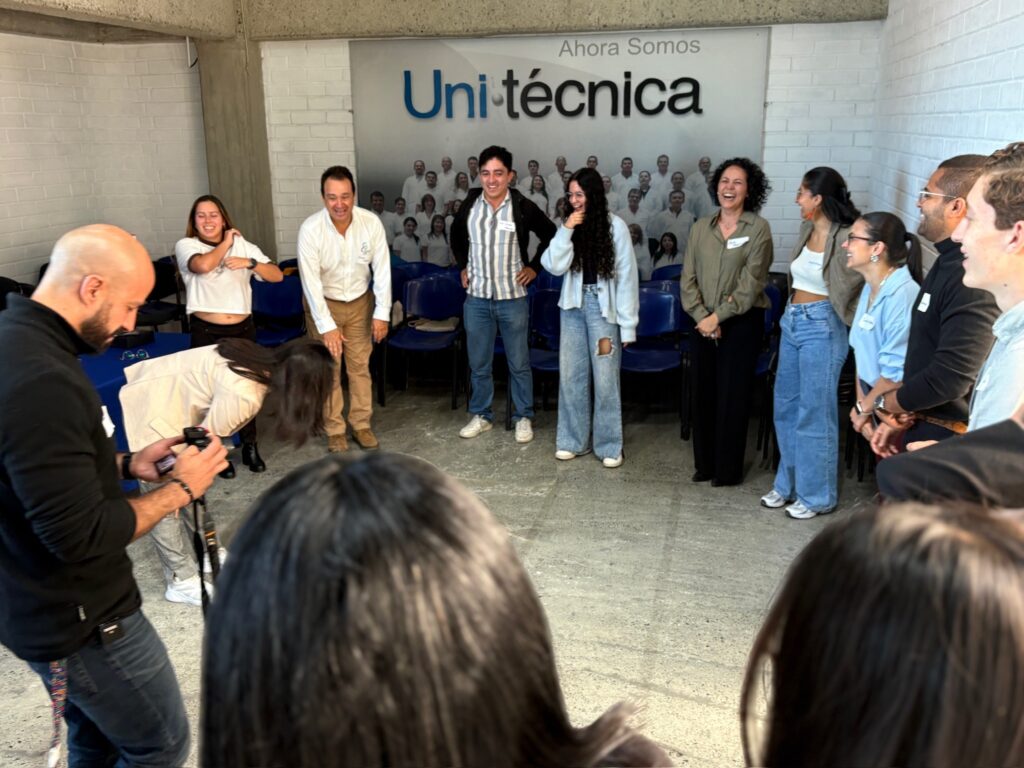
Photography: NextGenC, Manizales
More than just the culmination of three years of evidence-gathering across the region, the #NextGenC Conversa | Feedback Festival marks the delivery of a valuable roadmap for local governments and civil society. NextGenC’s findings clearly demonstrate that young people in Colombia’s medium-sized cities are more than willing to lead, propose and build through dialogue. Now, the ball is in the court of the institutions and strategic partners, who have a historic commitment to translating this evidence into public policies, genuine guarantees of participation and better opportunities that respond to the real needs and expectations of young people in Cartagena, Quibdó and Manizales.