

Santander de Quilichao, Cauca

From Enthusiasm To The Right To Reinvent Oneself
Photo credit: Despacio
From Enthusiasm To The Right To Reinvent Oneself
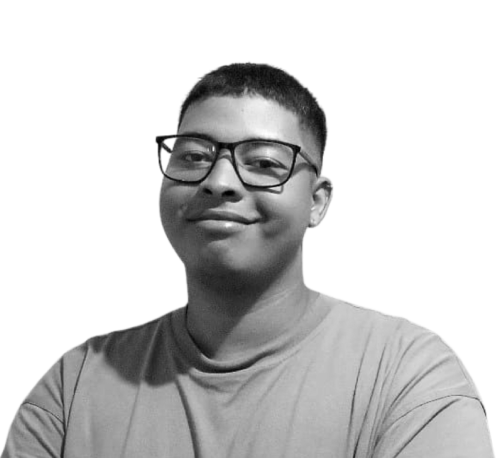
Kevin Alejandro Agrono
Community Leader
/ @alejandro_agrono
The 2021 Municipal Youth Council elections marked a historic milestone in Colombia and, in particular, in Santander de Quilichao. For the first time, thousands of young people were called upon to vote and run for office in an autonomous forum for political representation—a scenario that presented a great opportunity to demonstrate that young people could have a direct impact on local democratic life. The enthusiasm was palpable: in the streets, schools, neighborhoods, and villages, people spoke of the CMJ as a new avenue for participation—a channel through which the younger generations could take the lead in bringing about the changes they had always demanded.
However, four years after that historic day, the reality paints a different picture. The initial enthusiasm has waned, and what at first seemed like an open door to youth leadership has ended up becoming a forum with little impact, scant public recognition, and numerous limitations that prevent it from fulfilling its promises. Since 2023, there has been a noticeable decline in youth representation and in young people’s interest in sustaining the processes that once began with such momentum. This phenomenon cannot be explained simply by the idea that “young people are indifferent” or that “they no longer want to participate.” The root of the problem runs deeper and has to do with the lack of youth involvement in decisions that affect their future and the absence of forums that allow young people to connect with one another, share common agendas, and strengthen collective action.
The Municipal Youth Platform, which should serve as a space to bring together youth groups, has been weakened. Meetings have become sporadic or have not taken place at all, and the platform lacks the necessary strength to influence local policy. The Municipal Youth Council, for its part, has failed to establish itself as a significant interlocutor with the municipal administration or as a solid point of reference for young people in neighborhoods, villages, and districts. The lack of visibility, weak coordination with institutions, and difficulties in implementing concrete projects have led many young people to feel that this forum does not live up to the expectations raised in 2021.
The consequences of this decline are evident: a fragmented youth population with fewer opportunities for organized participation and a sense that their voices are not heard in municipal decision-making. The risk of this disillusionment is that mistrust in institutions will deepen and that young people will distance themselves even further from representative forums, perpetuating the idea that “politics doesn’t work.”
Local democracy cannot afford to exclude its young people.
However, this analysis should not stop at disillusionment. It is also necessary to recognize that the first term of the CMJ in Santander de Quilichao, though limited in its results, yielded valuable lessons. The outgoing council members shouldered the responsibility of blazing a trail that had never been traveled before. They faced logistical, political, and institutional challenges for which there was no prior guidebook. Their experience—with its successes and mistakes—now serves as a fundamental foundation for rethinking youth participation in the municipality.
As we look ahead to the new term, there is room for hope. The next four years could mark a rebirth for youth participation if expectations can be managed realistically and the lessons learned are put to good use. We now know what a council member can and cannot do, what the limits of the position are, and where the real opportunities for advocacy lie. This clarity serves as a starting point for the new representatives to arrive with more concrete ideas, more realistic strategies, and proposals that address the true needs of Quilichao’s youth.
The challenge is great: it is about regaining lost trust, demonstrating that the CMJ is neither a mere ornament nor a symbolic stage, but a platform capable of bringing about real change. To achieve this, it will be key to strengthen coordination with the Youth Platform, reactivate meeting spaces, ensure that the municipal administration opens effective channels for dialogue, and encourage youth groups to come together again around shared projects.
The youth of Santander de Quilichao are neither indifferent nor apathetic. On the contrary, they have demonstrated on countless occasions their capacity for organization in cultural, social, community, and environmental initiatives. The problem lies not in a lack of interest, but in the lack of opportunities and guarantees for that interest to translate into meaningful advocacy. The new council members have the opportunity to demonstrate that this space can be different—that youth participation need not be reduced to a mere token gesture. Recent history has revealed shortcomings, but it has also provided lessons. Now it is up to the new generation of representatives to transform those lessons into opportunities.
Local democracy cannot afford to exclude its young people. A society that does not listen to its youth condemns itself to repeating the same mistakes with the same old voices. The call is for Santander de Quilichao, in this new cycle, to dare to trust its youth, open up real spaces for them, and allow them to be protagonists of their own transformation. Because young people are not just the future: we are the present that refuses to give up its right to participate and transform.