
The Youth Treasure Hunt: Mapping Collectives and Movements in Colombia’s Intermediary Cities
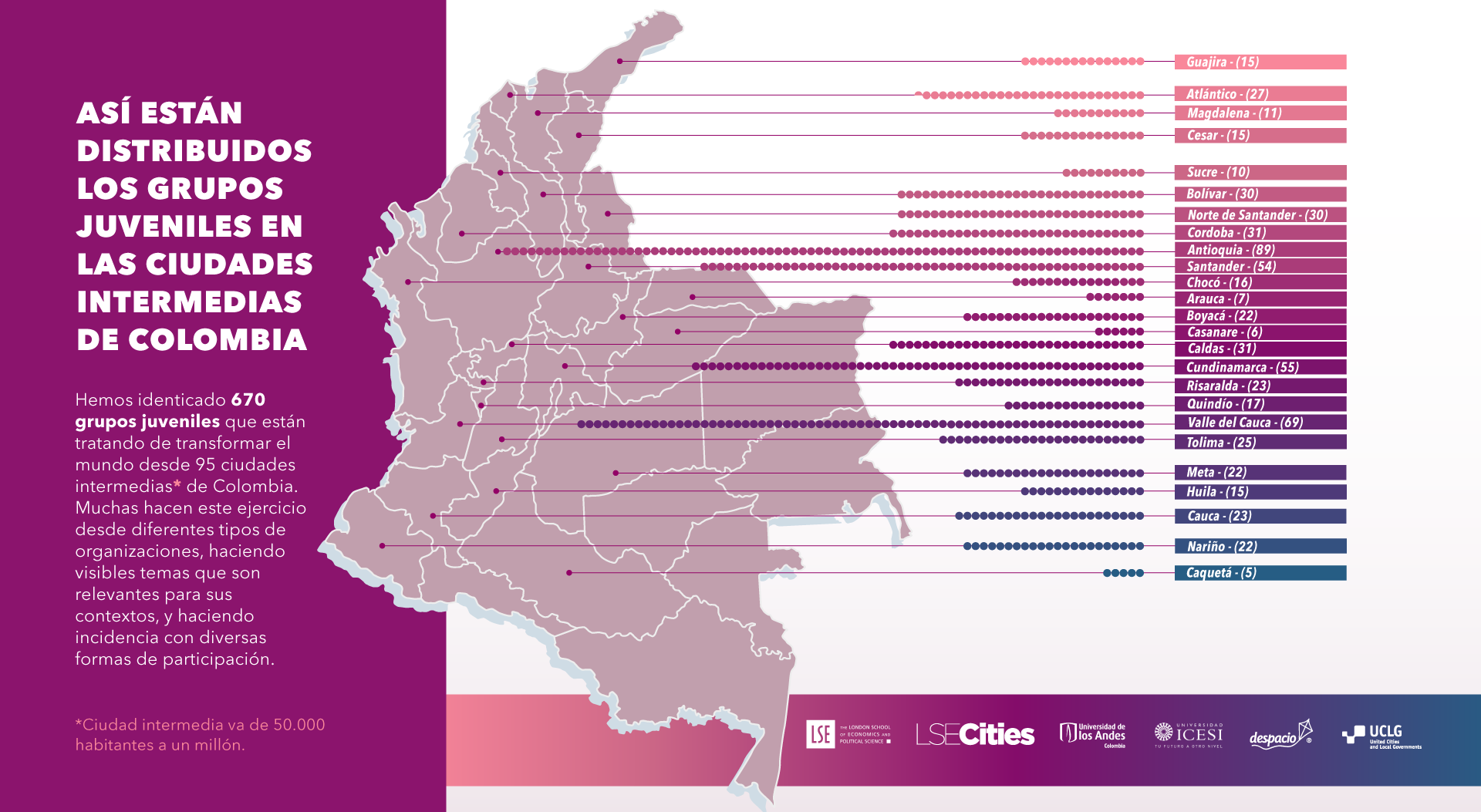
At the core of NextGenC —Next Generation Urban Governance in Colombia’s Vanguard Intermediary Cities— lies the belief that youth participation is reshaping urban life. From the very beginning, one of our key goals has been to identify how youth groups are organized, how they act, and how they connect in Colombia’s intermediary cities (those with populations between 50,000 and 1 million).
What did we do?
We launched a nationwide mapping exercise to locate youth actors driving change in their local contexts. Through professional and personal networks, youth council contacts, national databases, regional media, and social media monitoring, we identified 670 youth groups across 25 departments in the country.
This mapping allowed us to understand:
- The most common types of youth organization in urban intermediate settings.
- The role of digital tools and platforms in collective action.
- The key topics that mobilize youth across regions.
What did we find?
The youth groups identified work across a wide range of issues—from political participation and climate justice to community arts, feminism, and grassroots education. Many of them also leverage digital platforms, social networks, and collaborative technologies to amplify their impact.
This initial mapping has been essential for moving toward our core objective: understanding how youth are redefining urban governance in their cities, and how digital technologies enhance or limit their participation.
What’s next?
We are now in a new phase of the project and are already working directly with youth and youth-led organizations in Manizales, Quibdó, and Cartagena, the three main case study cities of the project.
In parallel, we continue to invite young people from the 95 intermediary cities to submit new groups or update existing records. Our goal is to keep building a living map of youth action, visibility, and collaboration.