
#NextGenC Highlights Youth Resistance in Quibdó at La Tríada 2025
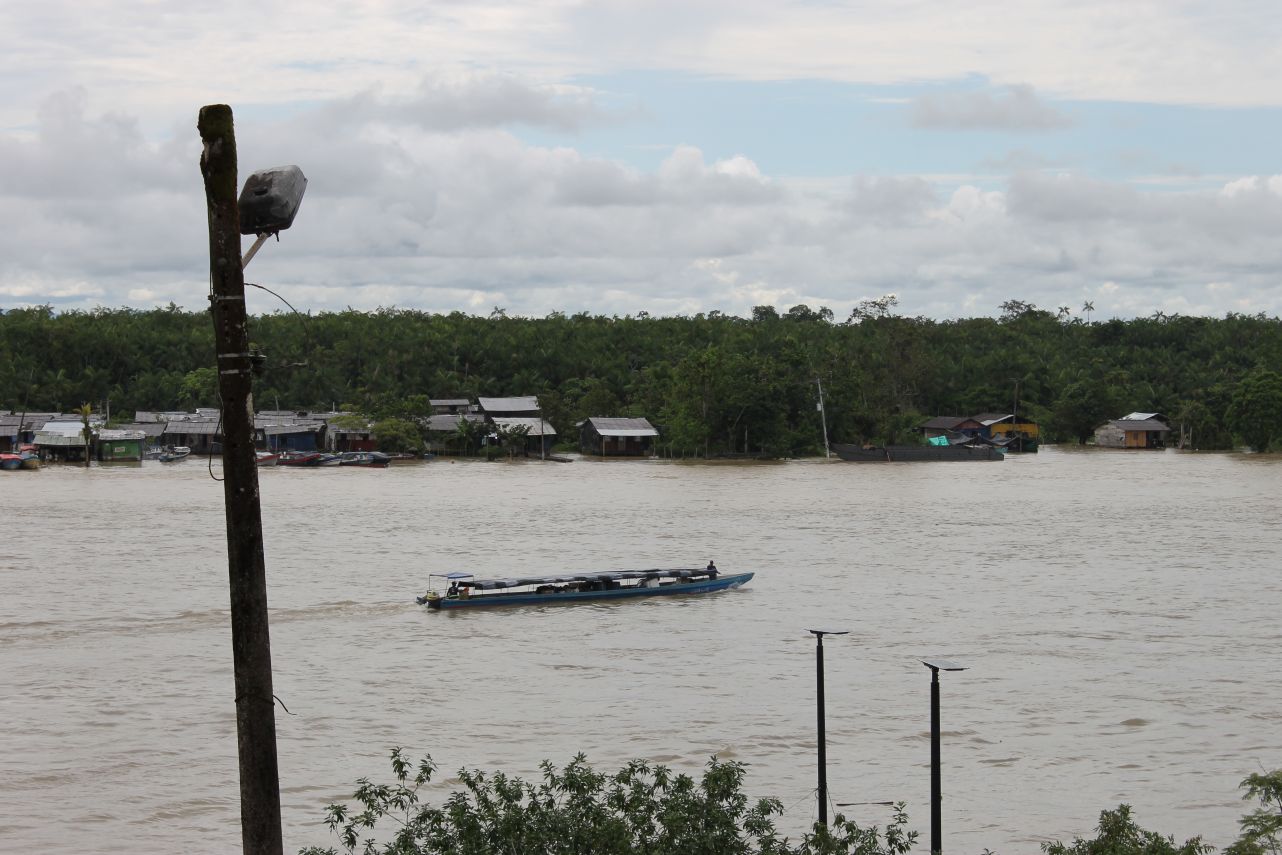
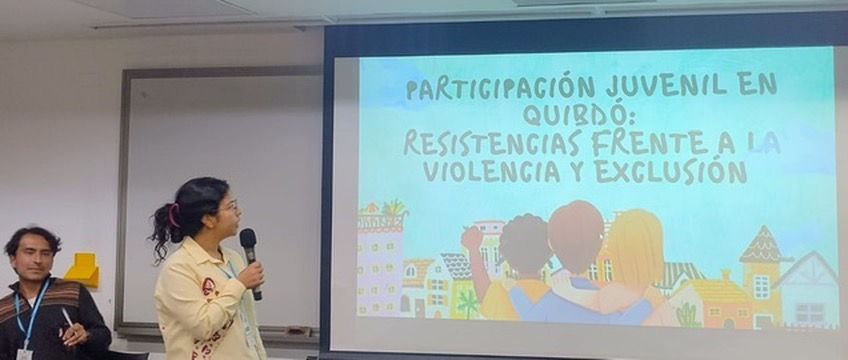
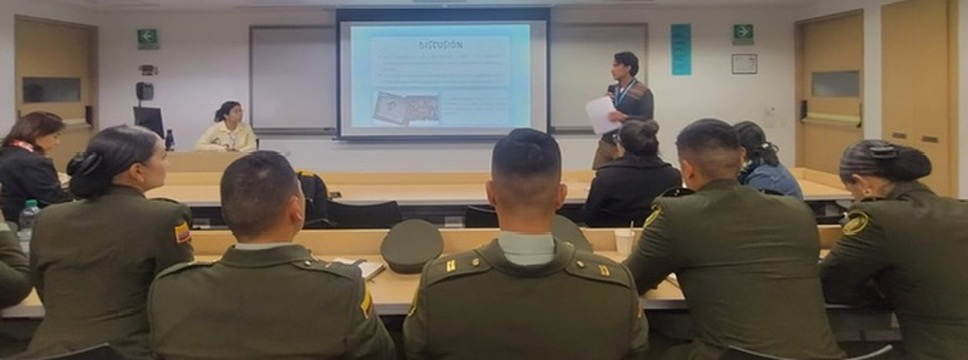
During the Latin American Congress on Social Sciences and Governance – La Tríada 2025, held in Bogotá from October 7 to 9, the #NextGenC project shared recent advances in its research in the city of Quibdó, exploring how youth confront violence and exclusion through political and cultural forms of resistance.
The presentation, titled “Youth Participation in Quibdó: Resistance in the Face of Violence and Exclusion,” showcased findings from fieldwork conducted by the research team from Universidad de los Andes in this Pacific Colombian city.
A young, diverse city marked by violence
Quibdó is a city with over 85% Afro-descendant population and 4% Indigenous population, and is marked by alarming social indicators: the highest rate of monetary poverty in the country (62%), youth unemployment at 36.4%, and 148 homicides recorded in 2024, according to data from the National Administrative Department of Statistics – DANE (2025).
In this context, young people not only face structural exclusion, but also stigmatization, lack of opportunities, and a weakened institutional presence. Nevertheless, far from withdrawing from public life, they organize, create, and resist.
Youth repertoires for building peace
The research team worked with local youth leaders, developing a qualitative methodology that included 26 interviews with young people and accompaniment in 14 political participation activities. “The first and perhaps most important thing is how young people interpret the violence that affects them, because peacebuilding is intertwined with the ways violence is experienced in their lives. We argue that violence affects them across multiple dimensions: individually (personal identity and life projects), within the family (domestic violence), in the community (weakened social fabric), and territorially (structural precariousness),” explained Daniel Sánchez, researcher at Universidad de los Andes.
Based on this work, the team identified three key repertoires for peacebuilding:
- Everyday resistance: strategies of care and unlearning violent behaviors in order to break naturalized cycles of violence.
- Defense of identity: actions aimed at protecting and making Afro and Indigenous cultures visible as a foundation for peacebuilding.
- Negotiation: interventions by young people as mediators to enable the continuity of everyday life.
“Yes, we have managed and we will continue to take young people away from violence.”
— Testimony collected during fieldwork
“I realized there were other ways of doing the same thing… I’ve learned to channel all that anger through art and build a pedagogy of resistance.”
— Testimony collected during fieldwork
These forms of action are not limited to formal organizations. Many young people participate through informal collectives, cultural expressions, educational initiatives, or neighborhood-based alliances. Youth participation in Quibdó is diverse, context-specific, and deeply political. In this city, young people play a key role in broad processes such as peacebuilding and urban governance—even in contexts highly affected by violence.
Toward fairer urban governance
NextGenC’s participation in La Tríada reaffirms the project’s commitment to producing situated knowledge and recognizing youth as central actors in transforming their territories. This presentation builds on the project’s previous presence at the 10th Latin American and Caribbean Conference on Social Sciences (CLACSO 2025), where preliminary findings were shared on youth in Cartagena, Manizales, and Quibdó. The findings from Quibdó enrich the project’s comparative perspective and invite us to imagine forms of urban governance that recognize the many voices of youth, their repertoires of resistance, and their contributions to building peace from the local level.