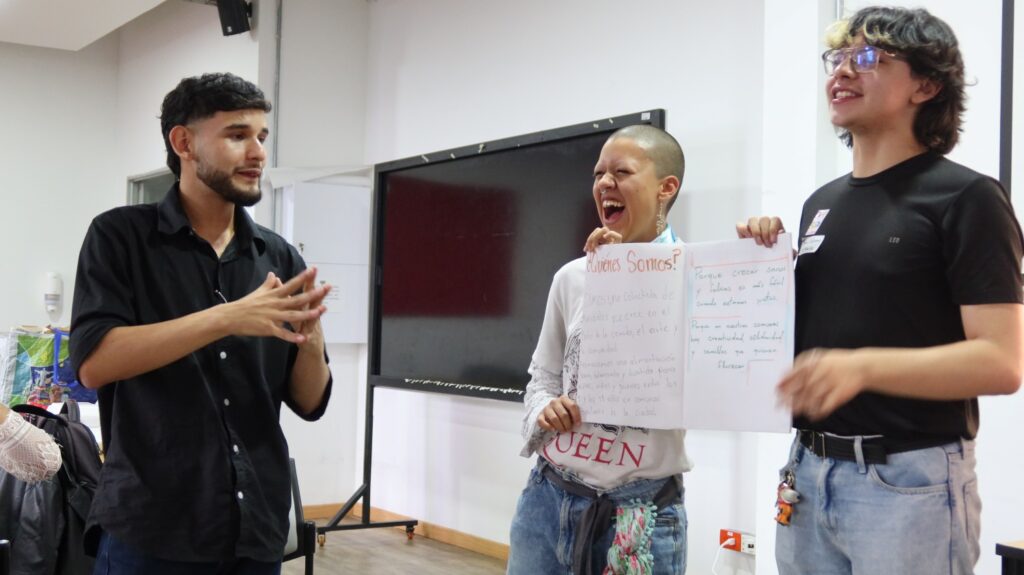
Youth in Cartagena, Quibdó and Manizales lead social, environmental and cultural transformations in their territories
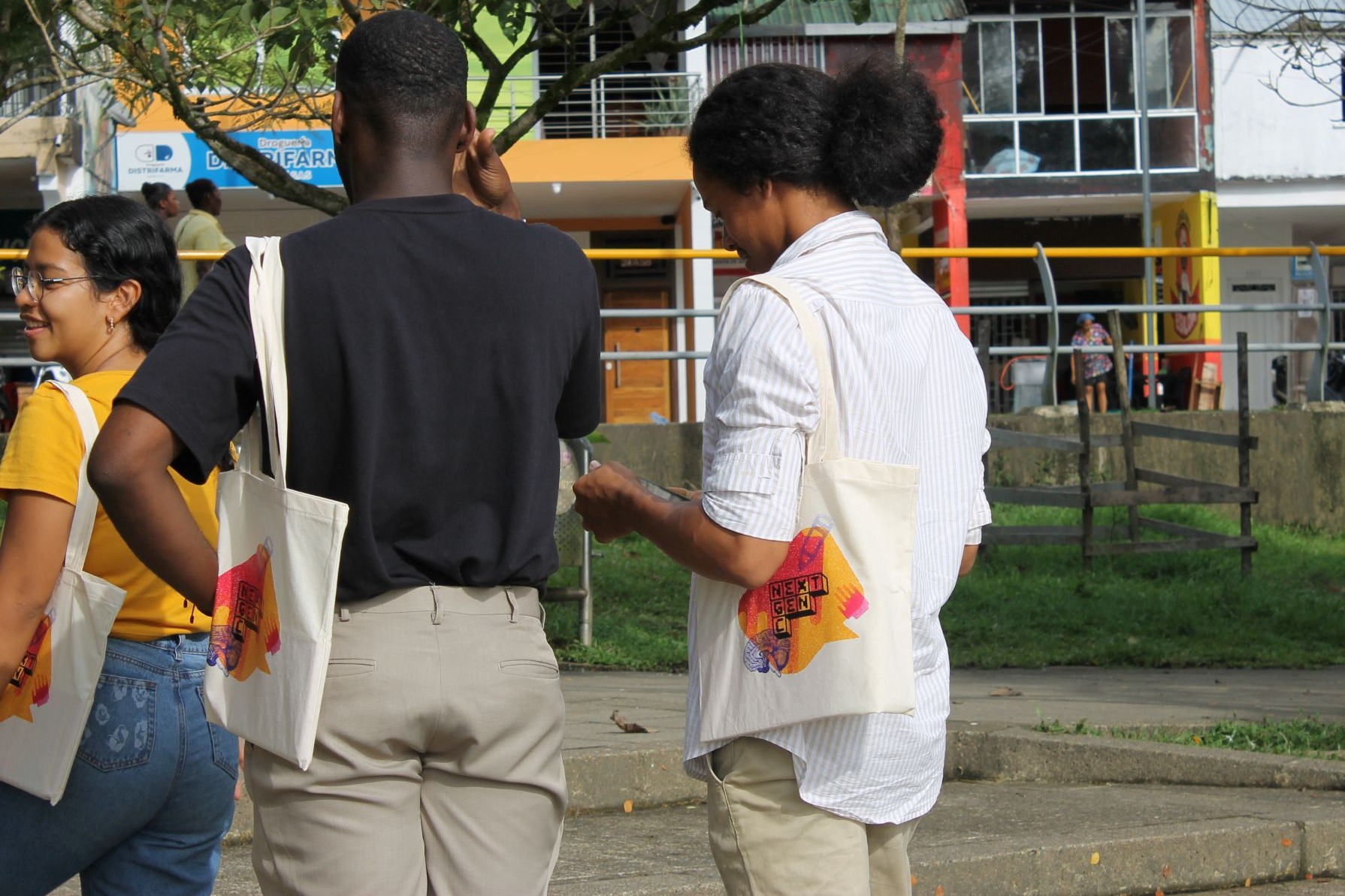
Bogotá, August 2025. From the beaches of Cartagena to the Atrato in Chocó and the coffee-growing slopes of Manizales, the research carried out by NextGenC, Generación Urbana Conectada, paints a powerful picture: the youth of intermediate cities are driving agendas of culture, peace and the environment from within their own territories. They do so through multiple actions ranging from membership in youth wings of political parties, to the creation of community schools, to exercising leadership by creating digital content. One of the project’s most recent studies combined a mapping of youth organizations with semi-structured interviews and participant observation, carried out by a team that included young local researchers; this made it possible to reach the heart of the processes, learning about their challenges and their transformative potential.
The research, conducted by a team from the Universidad de los Andes and published at www.nextgenc.net/investigacion , focused primarily on the three intermediate cities that have been studied in the project since its launch in 2023. Among the main findings are:
· In Cartagena, the backdrop is demanding: a city of 1,059,626 inhabitants, with 54% informal employment and a decade (2008–2018) of 12 mayors, a situation that undermined governance and institutional trust. There live 268,824 young people between 14 and 28 years old. In that context, youth processes focus on cultural identity and racial justice, reclaiming Afro-descendant heritage and denouncing historical inequalities; they question mass tourism for its effects of gentrification and exclusion, and fight for fairer, more sustainable models; they also face problems such as prostitution associated with lack of opportunities and waste management, which affects neighborhoods, waterways and mangroves.
· Quibdó appears as a laboratory of resilience: 133,906 inhabitants, the highest monetary poverty in the country (60.1%) and the highest youth unemployment rate for the last quarter of 2024; nonetheless, 70.3% of those in 11th grade access higher education. In this scenario, youth prioritize peacebuilding and memory, with actions of dialogue, reconciliation and care for life. They denounce the impact of the armed conflict (including forced recruitment), the loss of ethnic identity due to displacement and violence, and the fragility of mental health (especially among indigenous youth) given the scarce psychosocial services with a differential approach. They complement their action with social protest, community art and tables of dialogue with institutions; their institutional leadership also appears in schools, the university and youth councils.
· In Manizales, a city with a floating youth population due to the concentration of higher education institutions, highly diverse themes and forms of participation emerge. Some young people become involved in environmental defense: from ties to the páramos, the snow-capped peaks and the watersheds to conservation campaigns for the sustainability of the territory. In addition, the agenda is rounded out by democracy (demand for real representation and mechanisms such as the Youth Cabinet), education (including rural), gender (prevention of violence and breaking down stereotypes) and mental health (visibility and care). In the repertoire of action coexist digital activism, community work and cultural expressions that range from ballroom to graffiti, as languages to contest meaning and identity in public space.
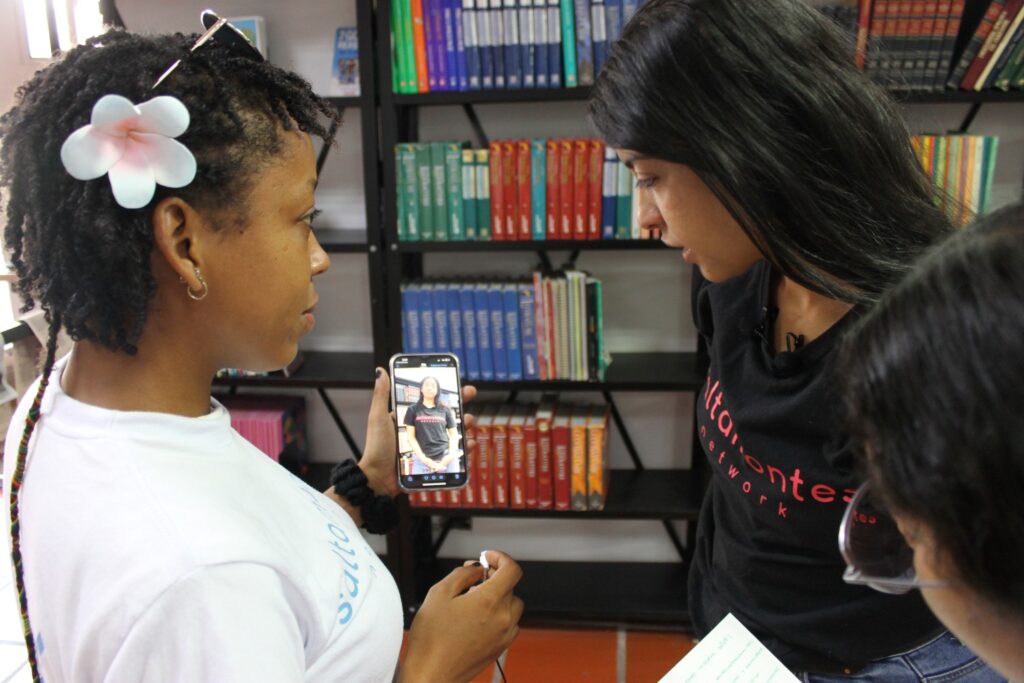
Technology enters and leaves the scene according to local conditions: where there is greater access, social networks become levers of organization and reach (campaigns, content and calls to action, among other activities); where there is less access, community networks, art and on-the-ground dialogue weigh more. In all cases, digital activism appears as a resource recognized by the actors themselves.
«De hecho, en mi proceso me he encontrado con eso, y es que los jóvenes participan por medio de las redes sociales. Porque ahí uno se da cuenta que la participación política, no solo seda en el ámbito institucional, sino que también los jóvenes expresan lo que sienten, eso es una movilización política del cuerpo, expresan lo que sienten por medio de una nota de Instagram, por medio de una historia, por medio de lo que comparten en Twitter», joven de Manizales.
“I love seeing many young people now doing activism [on social networks]. Young people who are using social networks to teach sign language, for example, or young people who are even designing apps so that people can communicate or can learn a language. I feel that from the activism they are doing they are making good or appropriate use of those technologies,” youth from Cartagena.
The result of this first release leaves a clear message: collective youth action is already changing the urban conversation. In Cartagena, culture and racial justice weave belonging and rights; in Quibdó, peace is being built through sheer effort amid gaps; in Manizales, care for the environment orders a vision of the future. NextGenC seeks to amplify these voices as a platform for knowledge and participation for more inclusive, sustainable and resilient intermediate cities.
NextGenC, Generación Urbana Conectada, is a research project developed by the London School of Economics (LSE), ICESI University of Cali and the Universidad de los Andes of Bogotá together with the NGOs UCLG of Barcelona and Despacio of Bogotá. It is funded by Fondation Botnar and is part of the TYPCities program (Technology and Youth Participation in the Governance of Intermediate Cities in Low and Middle Income Countries) with presence in Senegal, Nepal, India, Indonesia, Lebanon, Colombia and Jamaica.